
All Bad Things Come to an End Too
By Jim Siemens | N.C. Board Certified Family Law Specialist
This is part 1 of a series on mindfulness and decision-making during divorce.
How Negativity Bias Prolongs Divorce and How to Break Free
If you are reading this, there is a good chance you have already begun taking practical steps to protect yourself.
You may have gathered important documents.
You may have secured accounts and passwords.
You may even be thinking about what the next thirty days could look like.
Those steps matter. They provide structure and protection at a time when things can feel uncertain.
But there is another part of divorce preparation that is just as important—and far easier to overlook. It involves a little mindfulness around why the experience of bad things can become prolonged.
WHY DIVORCE CAN FEEL SO CONSUMING
We all remember the maxim, “all good things come to an end”.
What we often forget is that difficult things do, too, when we let them.
Divorce does more than change your legal or financial circumstances. It activates your survival brain. When the mind senses threat, it becomes vigilant, critical, and risk-focused. Psychologists refer to this as negativity bias, and it exists for a reason—it evolved to keep us safe.
During divorce, negativity bias often shows up as:
harsh self-judgment
fixation on what your spouse is doing wrong
a sense of being trapped or victimized
repeated mental replay of past conversations
a growing feeling that your options are narrowing
These reactions are not signs of weakness. In the short term, they can even be protective.
The trouble begins when they do not pass.
When the nervous system remains on high alert, clarity suffers. Decisions become reactive. Perspective narrows. Everything starts to feel urgent and permanent—even when it is not.

THE “SECOND ARROW”
A useful way to understand this comes from the metaphor of the “second arrow.”
The first arrow is the painful event itself:
The end of a marriage. That arrow is real. It hurts, and the pain of loss passes with time.
The second arrow is what we add on top of the event:
I’ve failed myself/my children/my family.
They have done this to me.
The only choices I have left aren’t good.
The only path forward is conflict.
Unlike the first arrow, the second arrow is optional.
And very often, it is the second arrow that keeps people stuck—emotionally, strategically, and financially.
WHY THIS MATTERS IN DIVORCE
The practical tools people use in divorce—checklists, timelines, financial planning—are designed to create order and control.
They work best when your nervous system is not in a constant state of alarm.
Clear thinking is not just a personal goal during divorce. It is a strategic advantage. People who can slow down, regulate stress, and regain perspective tend to make better decisions, avoid unnecessary conflict, and conserve resources—emotional and financial.
A SIMPLE PRACTICE
When a painful thought or surge of emotion arises, pause for a moment and ask yourself:
Is this the first arrow?
Or am I adding a second one?
That question alone can create just enough space to interrupt the spiral and return to the present moment.
MOVING FORWARD
Divorce is difficult. There is no denying that.
But it is also temporary.
Bad things pass.
Good things return.
And how you move through this period—how you think, decide, and care for yourself along the way—matters more than you may realize.
Ready to Move Beyond Survival Mode?
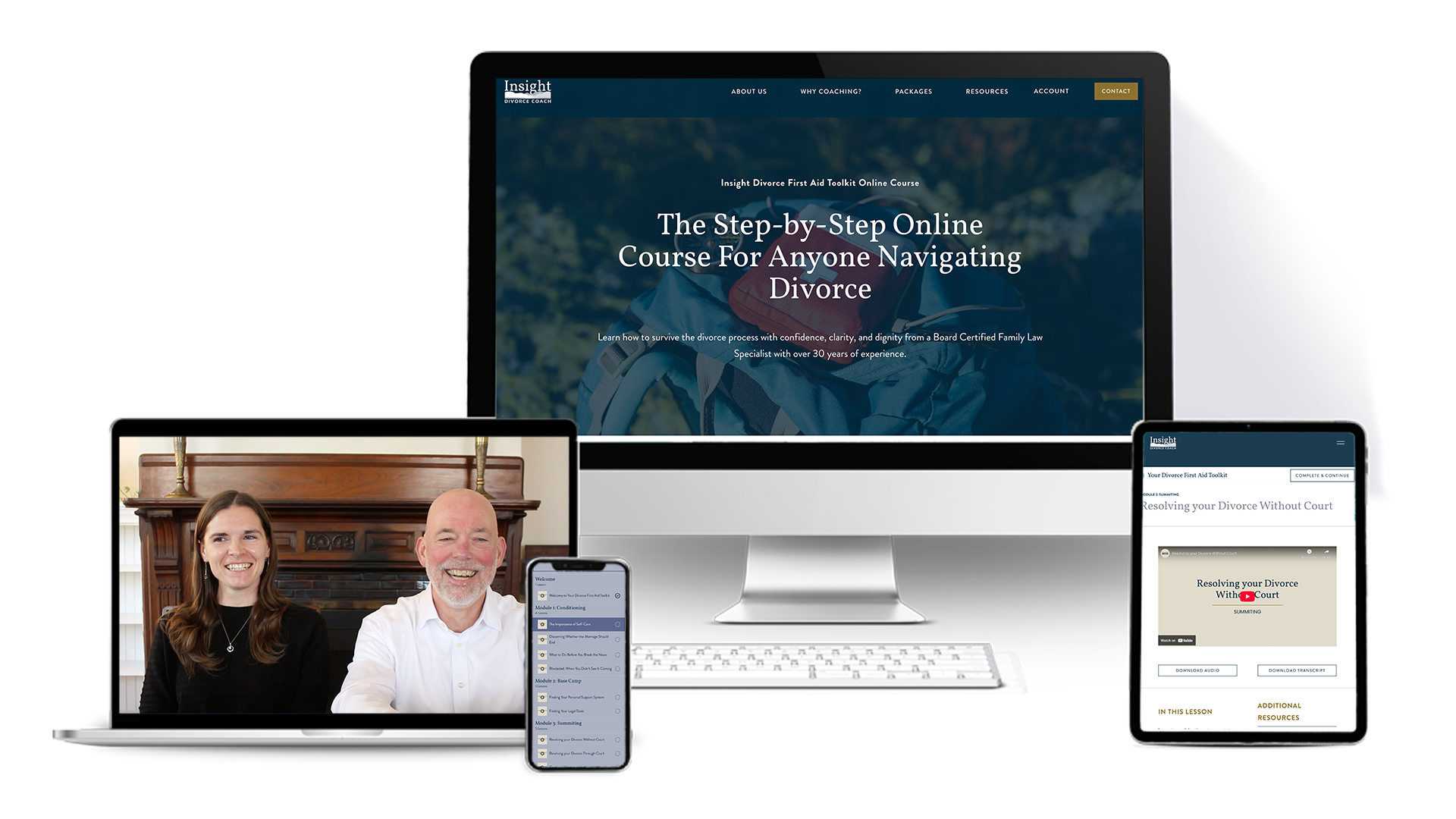
Recognizing the second arrow is just the beginning. The Insight Divorce First Aid Toolkit gives you the tools to navigate divorce with clarity and confidence—not just surviving it, but moving through it strategically.
This comprehensive video course covers everything from protecting your privacy and securing essential documents to understanding your legal options and avoiding the most costly mistakes people make during divorce. You'll learn practical ways to quiet your nervous system, make better decisions under pressure, and build the foundation for what comes next.
Don’t let fear and reactivity drive your choices.

About Jim Siemens
Jim Siemens is an N.C. Board Certified Family Law Specialist with 30 years of practice in Asheville, NC. He founded Insight Divorce Coach to give people the knowledge, tools, and preparation they need to navigate divorce with clarity and confidence before, during, and after the legal process.