
Fight, Flight, and Freeze in Divorce
By Jim Siemens | N.C. Board Certified Family Law Specialist
This is part 2 of a series on mindfulness and decision-making during divorce.
How Stress Responses Shape Divorce Decisions and What You Can Do About It
If you are going through divorce, your body is involved whether you realize it or not.
Long before your mind weighs options, strategies, or outcomes, your nervous system is already reacting. Understanding how that reaction works—and learning how to steady it—can meaningfully change how you experience the divorce process and the decisions you make along the way.
THE STRESS RESPONSE YOU DIDN’T CHOOSE
When the brain perceives threat, the sympathetic nervous system activates. This is the body’s built-in survival system. It prepares us to respond quickly to danger, whether that danger is physical or psychological.
Activation can include:
increased heart rate and blood pressure
shallow or rapid breathing
narrowed attention
release of stress hormones such as adrenaline
In this state, long-term thinking becomes harder. Perspective narrows. Subtlety is lost.
This is not a personal failure. It is biology.
FIGHT, FLIGHT, AND FREEZE IN DIVORCE
Divorce contains many triggers for this response—unexpected emails, financial uncertainty, confrontations, court appearances, and settlement conferences.
Under stress, people often default into one of three familiar patterns:
Fight: becoming combative, rigid, or overly certain
Flight: avoiding decisions, disengaging, or delaying
Freeze: going blank, shutting down, or struggling to respond
These reactions are not signs of weakness. They are nervous systems doing exactly what they evolved to do.
WHY THIS MATTERS IN DIVORCE
When someone is in fight, flight, or freeze:
complex problem-solving suffers
nuance is lost
memory becomes unreliable
decisions tilt toward short-term relief rather than long-term outcomes
Clear thinking during divorce is not just emotional hygiene. It is a strategic asset.
People who can recognize when their nervous system is activated—and take steps to regulate it—tend to make better decisions, avoid unnecessary conflict, and conserve both emotional and financial resources.

YOUR BUILT-IN COUNTERBALANCE
The body also has a complementary system: the parasympathetic nervous system. This system helps restore balance after stress.
One of the simplest and most accessible ways to activate it is through conscious regulation of the breath.
A SIMPLE PRACTICE
Before a difficult conversation, meeting, or decision:
Inhale slowly through your nose for a count of four.
Exhale gently for a count of six.
Repeat for one to two minutes.
This lengthened exhale signals safety to the nervous system and helps shift the body out of survival mode.
PREPARING BEFORE IT MATTERS MOST
Awareness alone is helpful, but practice matters.
Learning how your body reacts under pressure—and rehearsing ways to regulate that response before the stakes are high—can make a meaningful difference when they are.
Divorce will test you. It can also become a training ground for steadiness, clarity, and self-trust.
Master Your Stress Response and Your Divorce Strategy
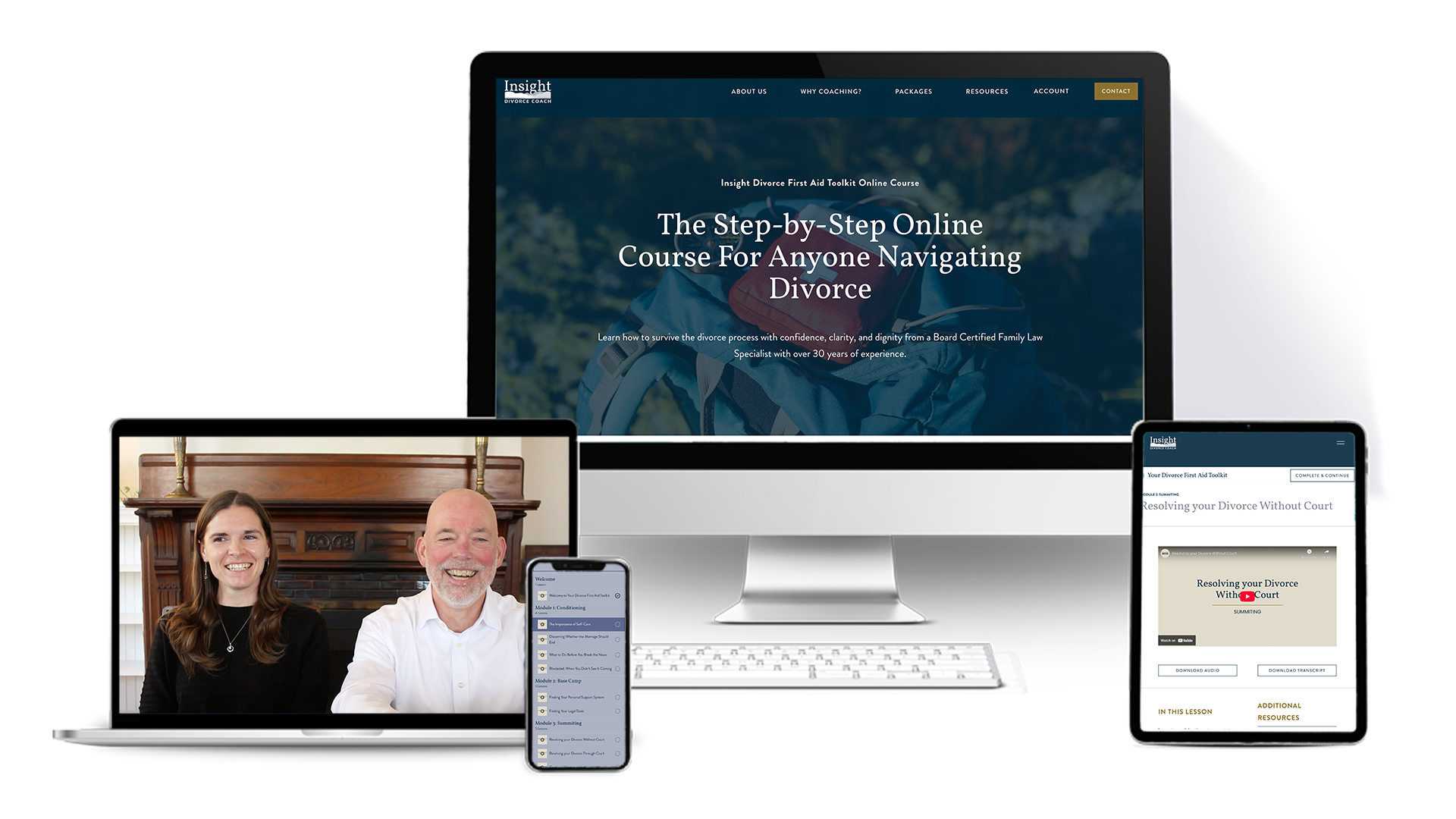
Understanding how your nervous system reacts under pressure is critical. But knowing what to do with that awareness in the moment, when the stakes are high and decisions matter, takes more than awareness alone.
The Insight Divorce First Aid Toolkit teaches you how to recognize stress patterns before they derail important conversations, prepare personally for difficult decisions, and show up grounded when it matters most. You'll get guidance on protecting yourself financially while maintaining the emotional steadiness that leads to better outcomes.
Whether you're facing a settlement conference next week or just beginning to consider your options, this course gives you the clarity and confidence you need right now.

About Jim Siemens
Jim Siemens is an N.C. Board Certified Family Law Specialist with 30 years of practice in Asheville, NC. He founded Insight Divorce Coach to give people the knowledge, tools, and preparation they need to navigate divorce with clarity and confidence before, during, and after the legal process.