
When a Marriage Wears You Down
By Jim Siemens | N.C. Board Certified Family Specialist
This is part 5 of a series on mindfulness and decision-making during divorce.
Recognizing the Impact of Chronic Conflict on Self-Trust and Self-Esteem
Not all marriages end with a dramatic rupture.
Some erode slowly.
Over time, patterns of interaction can take a quiet toll on confidence, self-trust, and emotional stability—often without either spouse fully recognizing what is happening while they are still inside the relationship.
Understanding those patterns matters, especially during divorce.
THE FOUR HORSEMEN OF A FAILING MARRIAGE
Relationship researcher John Gottman identified four communication patterns that reliably predict the breakdown of a marriage. He called them the “Four Horsemen”:
Criticism – persistent fault-finding directed at a partner’s character rather than specific behavior
Contempt – sarcasm, mockery, eye-rolling, or a sense of superiority
Defensiveness – reflexive self-protection that blocks responsibility or repair
Stonewalling – emotional withdrawal, shutdown, or disengagement
Most couples experience some of these behaviors at times. What matters is not perfection—it is persistence.
When these patterns become the dominant way a couple relates, the emotional climate of the marriage shifts.
THE CUMULATIVE EFFECT ON SELF-ESTEEM
Living in a relationship marked by chronic criticism, contempt, defensiveness, or stonewalling can quietly reshape how a person sees themselves.
Over time, people may:
second-guess their perceptions
lose confidence in their judgment
shrink their needs or expectations
internalize the sense that they are “too much” or “not enough”
This does not happen because someone is weak.
It happens because humans are relational beings.
We calibrate our sense of self in relationships. When the relationship environment becomes corrosive, the impact accumulates.

WHY THIS MATTERS DURING DIVORCE
When a marriage like this ends, people often expect relief—and are surprised to find lingering self-doubt, exhaustion, or emotional fragility instead.
These reactions are not signs of failure.
They are understandable responses to prolonged relational stress.
Without recognizing this dynamic, people may misinterpret their own state during divorce:
assuming they are incapable
believing they cannot trust themselves
concluding they are unprepared to move forward
In reality, they may simply be recovering from sustained emotional erosion.
PERMISSION TO NAME THE IMPACT
It is okay—and often wise—to acknowledge the ways a marriage may have worn you down.
Naming the impact does not assign blame.
It restores clarity.
Recognizing what happened allows people to distinguish between who they are and what they endured.
A COMPASSIONATE WAY FORWARD
Psychologist and meditation teacher Tara Brach offers a simple framework for meeting difficult experiences with care. It is often referred to as RAIN:
Recognize what you are feeling
Allow it to be present without judgment
Investigate it gently, with curiosity rather than blame
Nurture yourself with care and kindness
This approach helps people rebuild steadiness and self-trust without rushing or forcing resolution.
REBUILDING FROM THE INSIDE OUT
Divorce is not only a legal process. It is a period of recalibration.
When people acknowledge the impact of chronic relational stress and respond with self-respect, they regain clarity, confidence, and direction.
Healing does not require minimizing what happened.
It begins with seeing it clearly—and treating yourself with the dignity you may have learned to set aside.
Rebuild Your Confidence With a Clear Plan Forward
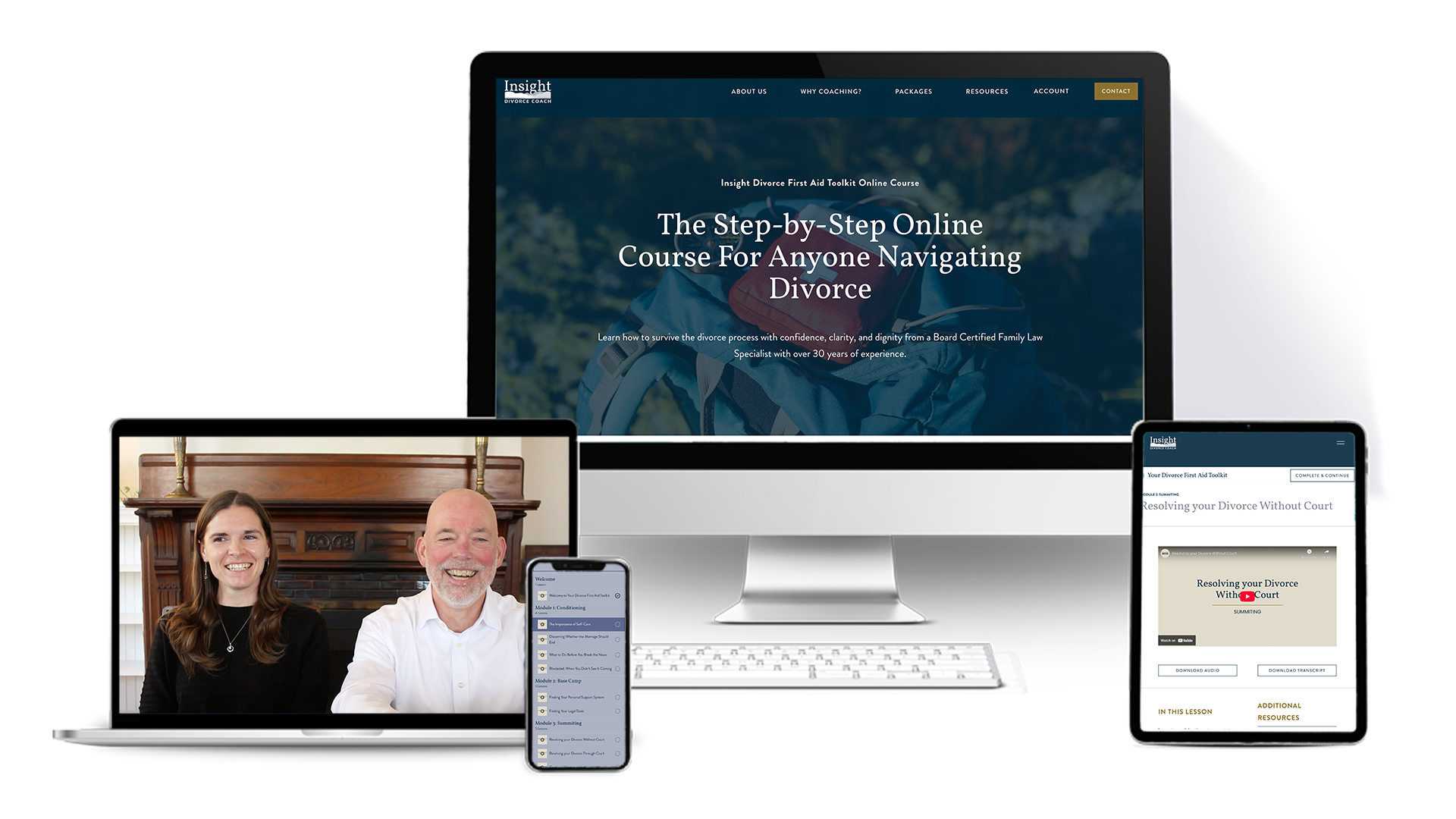
If chronic conflict has left you doubting your judgment, the last thing you need is more uncertainty about what comes next.
The Insight Divorce First Aid Toolkit gives you a clear roadmap to navigate divorce. You'll learn exactly what steps to take before you break the news, how to protect yourself legally and financially, what to look for in your legal team, and how to choose the divorce resolution path that aligns with your goals, not your fears.
This course is designed for people who've been worn down and need to rebuild clarity, confidence, and strategic thinking. You'll get practical frameworks for decision-making, tools to manage emotional overwhelm, and step-by-step guidance through every critical phase of divorce preparation.
You don't have to figure this out alone, and you don't have to keep second-guessing yourself.

About Jim Siemens
Jim Siemens is an N.C. Board Certified Family Law Specialist with 30 years of practice in Asheville, NC. He founded Insight Divorce Coach to give people the knowledge, tools, and preparation they need to navigate divorce with clarity and confidence before, during, and after the legal process.