
Loss Aversion in Divorce
By Jim Siemens | N.C. Board Certified Family Law Specialist
This is part 3 of a series on mindfulness and decision-making during divorce.
Why Fear of Losing Keeps Smart People Stuck and How to Loosen Its Grip
No one likes to lose.
Most of us will go to great lengths to avoid it. We respond more strongly to warnings about what we might lose than to promises about what we might gain. This tendency is not a flaw of character. It is a feature of the human mind.
Understanding this pattern can be especially important during divorce.
WHAT LOSS AVERSION IS
Psychologists use the term loss aversion to describe a well-documented phenomenon: the pain of losing feels stronger than the pleasure of gaining, even when the amounts are equal.
In practical terms, most people require the possibility of a significantly larger gain before they are willing to risk even a modest loss.
Loss aversion shapes everyday decisions:
paying for insurance we may never use
delaying vacations out of fear of falling behind at work
putting dreams on hold because what we have feels safer than what we cannot yet see
This bias is often protective. It helps us preserve stability and avoid unnecessary risk. But during major life transitions, it can quietly take control.
HOW LOSS AVERSION SHOWS UP IN DIVORCE
Loss aversion plays a powerful role both before and during divorce.
It helps explain why people remain in marriages that no longer work. Leaving feels uncertain. Staying feels known—even when it is painful.
Once a marriage ends, loss aversion often intensifies. It can appear in many forms:
refusing reasonable settlement options
escalating disputes over relatively small issues
clinging to symbolic victories at high emotional or financial cost
placing major life decisions in the hands of judges and systems simply to avoid responsibility

WHY IT IS HARD TO SEE IN YOURSELF
Loss aversion is easy to recognize in others. It is much harder to see when it is shaping your own decisions—especially under stress.
During divorce, fear of loss narrows perspective. Options appear limited. Compromise feels dangerous. Forward movement can feel like surrender rather than choice.
THE COST OF LETTING LOSS AVERSION DRIVE
When loss aversion goes unexamined, it often prolongs the divorce process, increases cost, and delays stability.
In trying to avoid loss at all costs, people sometimes give up the very gains they say they want: peace, resolution, and the ability to move forward.
A GROUNDING QUESTION
When you feel stuck, pause and ask yourself:
What am I most afraid of losing right now—and what might I be missing because of that fear?
That question does not require an immediate answer. Its value is in widening perspective.
MOVING TOWARD REAL GAIN
Loss aversion can be understood, worked with, and softened.
Divorce is not only about protecting what you have. It is also about making room for what comes next—and recognizing when fear of loss is quietly standing in the way.
Stop Letting Fear Make Your Decisions
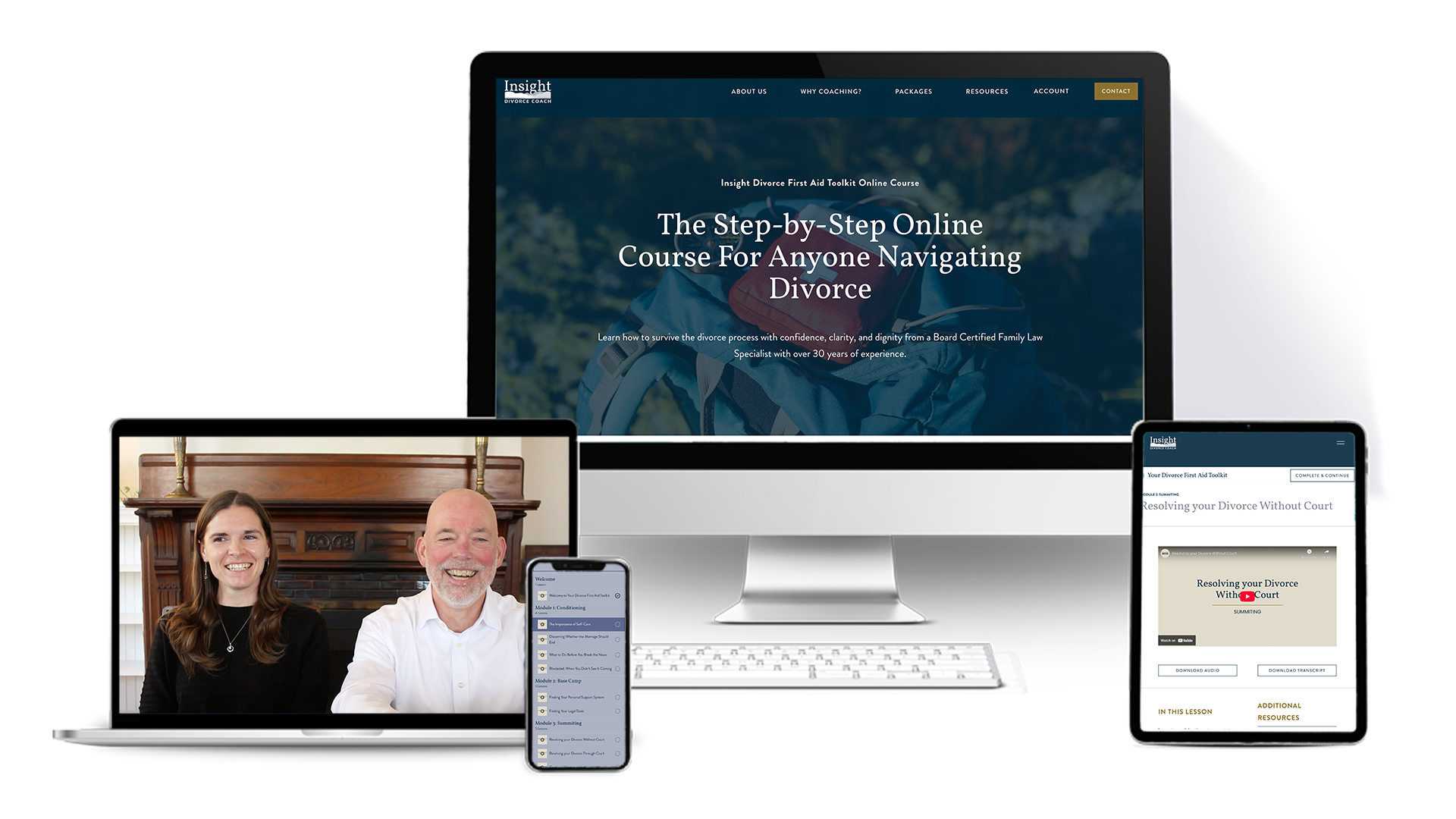
Loss aversion doesn't just make divorce feel harder—it can cost you time, money, and peace of mind you'll never get back. Breaking free requires more than awareness. It requires a clear framework and the confidence to execute it.
The Insight Divorce First Aid Toolkit helps you identify what you're truly protecting versus what fear is telling you to protect. You'll learn how to evaluate your situation objectively, recognize when you're escalating over issues that don't serve your long-term goals, and make decisions that actually move you forward.
Built from over 30 years of family law experience, this course provides an education in document protection, privacy strategies, and the personal and financial preparation that helps you move through this process with clarity and confidence.

About Jim Siemens
Jim Siemens is an N.C. Board Certified Family Law Specialist with 30 years of practice in Asheville, NC. He founded Insight Divorce Coach to give people the knowledge, tools, and preparation they need to navigate divorce with clarity and confidence before, during, and after the legal process.